Tracking void shape and the surrounding fields.
Moving cavity walls alter vacancy transport and local stress; diffusion and creep in turn reshape the wall. Jointly predicting geometry and fields connects boundary changes to the surrounding material state during defect evolution.
2D single cavity · 722 K · 5 MPa external pressure · recorded results
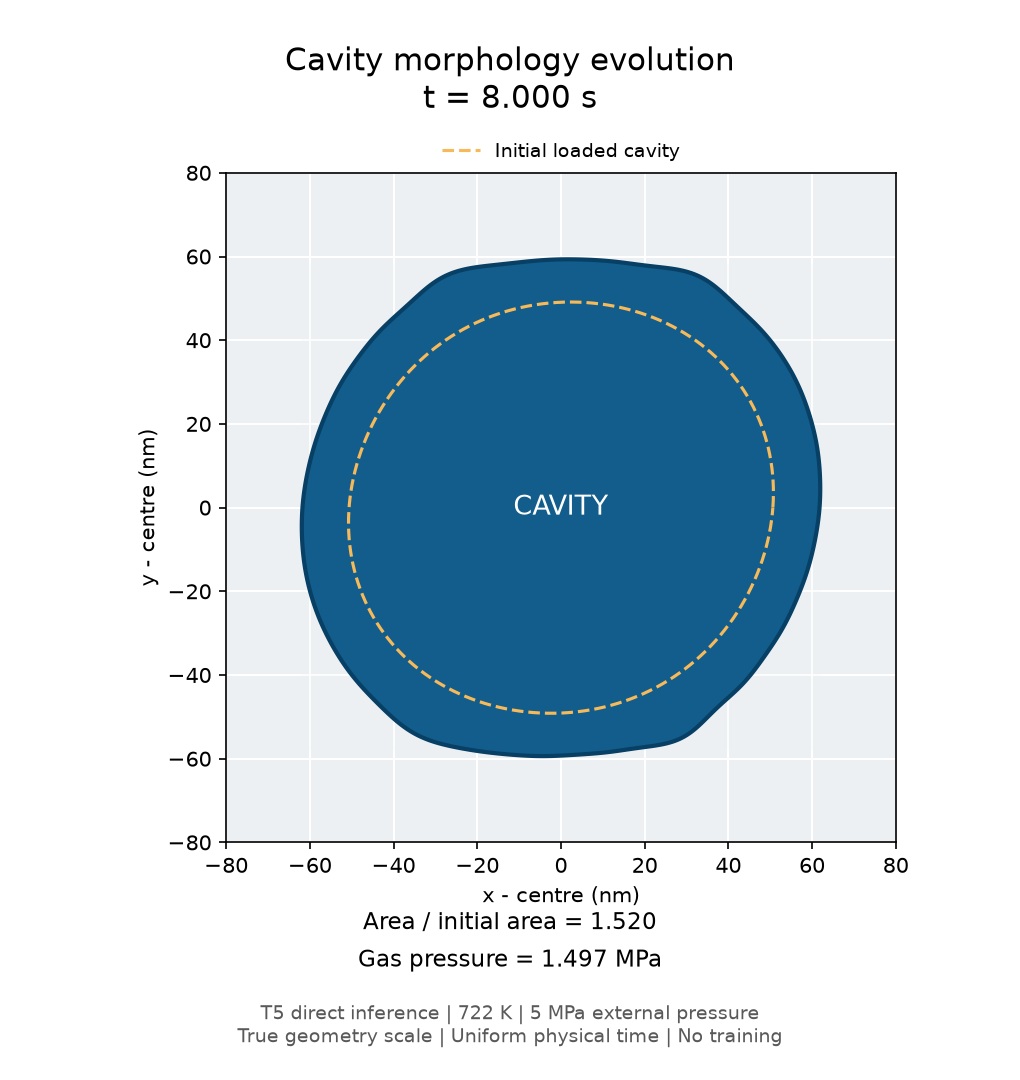
Initial voidCurrent void
- Area / initial area
- 1.520
- Internal gas pressure
- 1.497 MPa
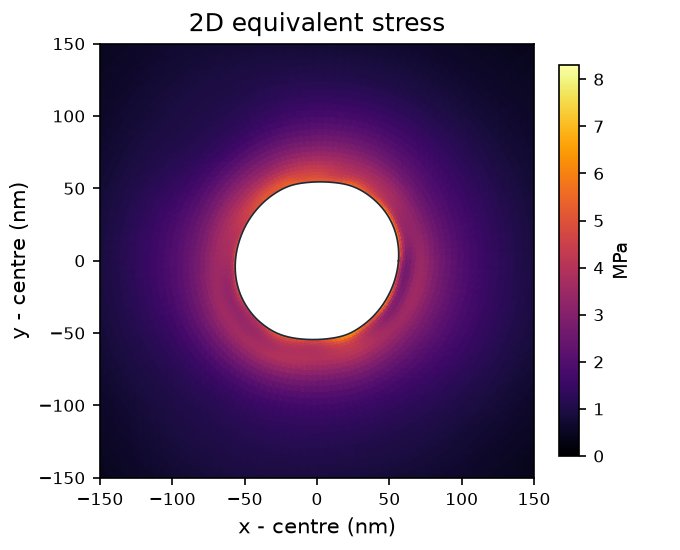
How surrounding fields evolve
Prediction workflow and case conditions
The model takes time and position as inputs and predicts the void boundary and the surrounding transport, creep and stress fields. The viewer replays saved results for a single 2D void over 0–8 s at 722 K and 5 MPa external pressure.
Compare the cavity wall and stress field at corresponding times to see where the geometry changes and how stress redistributes.