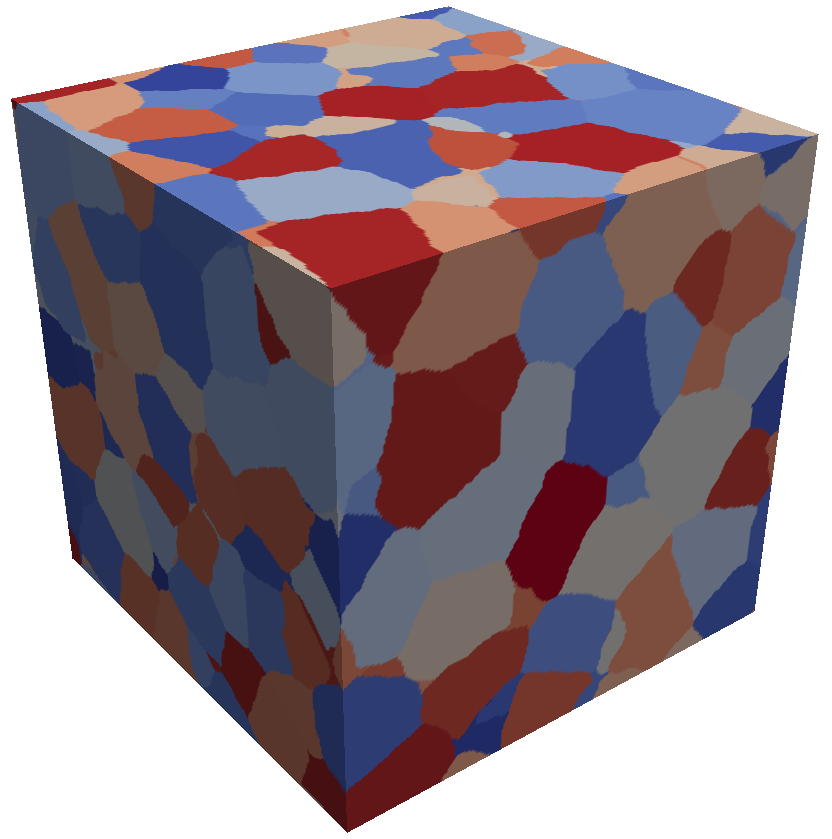
Atomic-layer coupling and twin growth
In simulations of copper, twinning partial dislocations form alternately at the two twin boundaries. As they glide on neighboring planes, the twin thickens layer by layer while it lengthens.
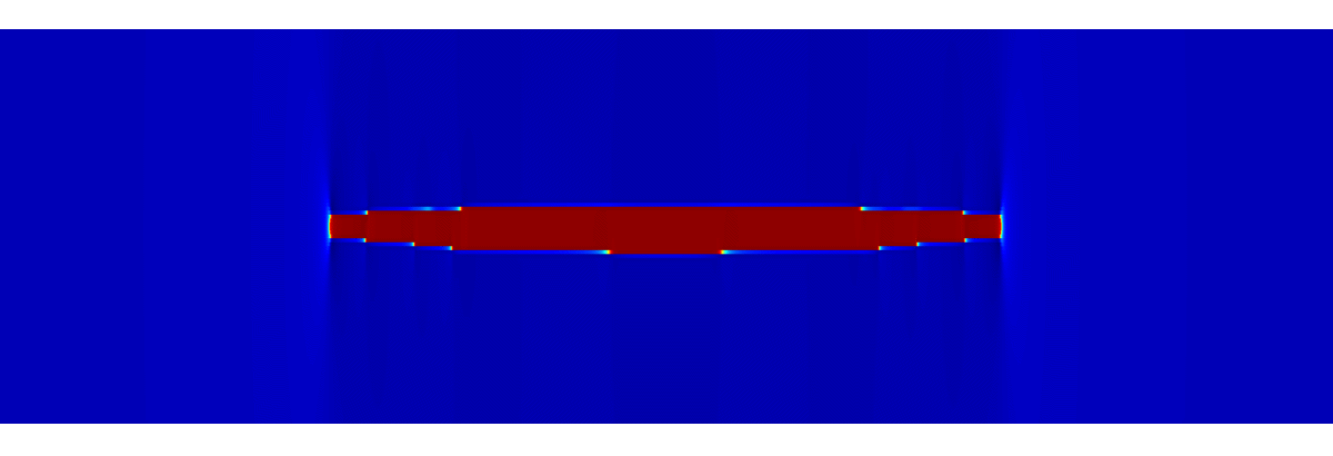
We study how atomic layers interact, how defects and grains evolve, and how those changes shape the mechanical response.
Slip between atomic layers supplies a local driving force for twin growth in copper. At the scale of a subgrain boundary, stress from dislocation pile-ups can favor void nucleation.
In simulations of copper, twinning partial dislocations form alternately at the two twin boundaries. As they glide on neighboring planes, the twin thickens layer by layer while it lengthens.
Discrete dislocation dynamics (DDD) follows gliding and piling-up dislocation lines to study how multiple pile-ups change local stress and the conditions for void nucleation.
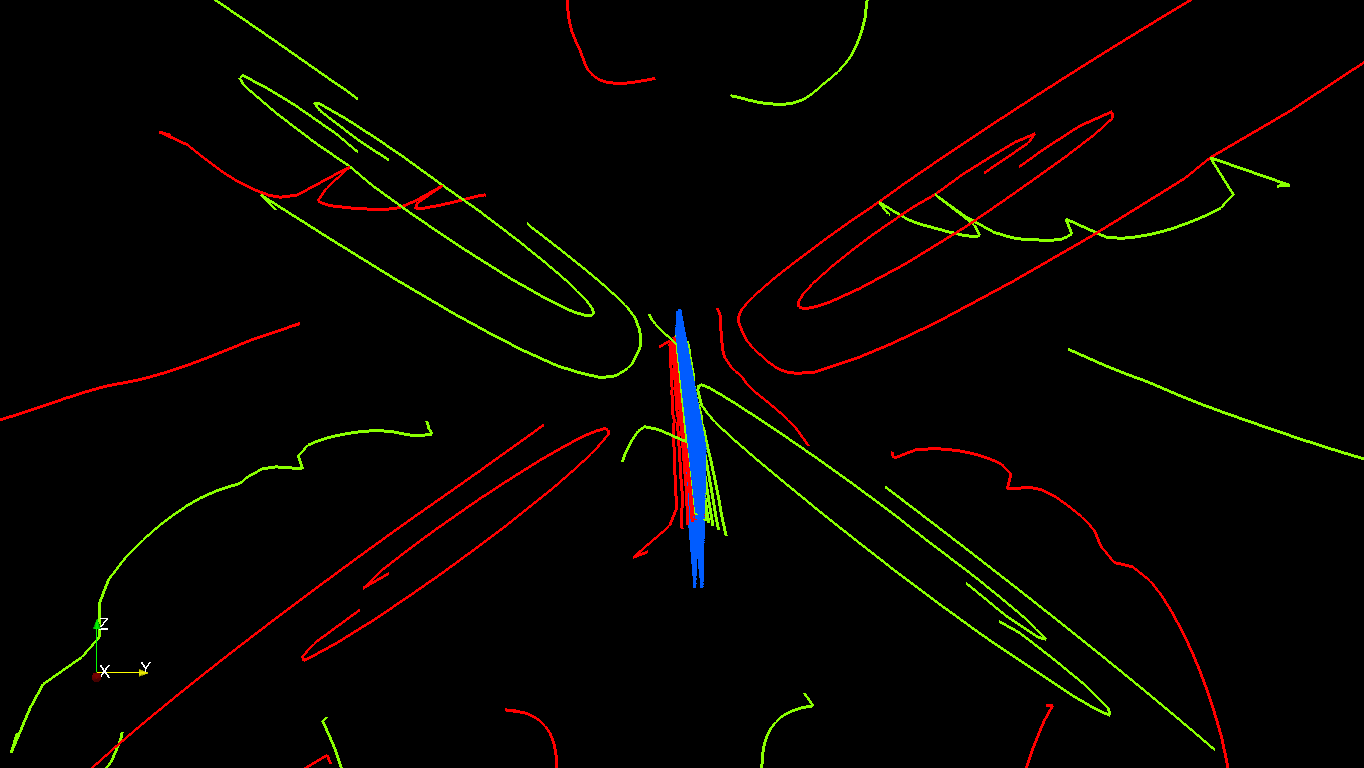
Track grain reorganization during deformation with phase field and crystal plasticity, then compare the overall softening response on stress–strain curves.
Surface diffusion tends to smooth cavity walls, while bulk diffusion can drive directional growth under nonuniform stress. Compare isolated and neighboring cavities to see how they interact.

Use energy and governing equations in neural field solvers and operator learning to predict fields within materials.
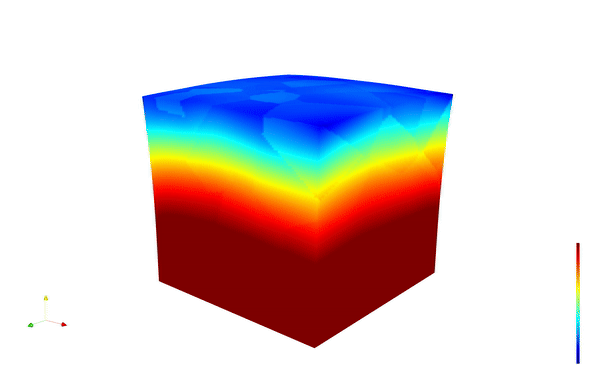
For 316L, compare acoustic modulus and independently measured SEM porosity before and after HIP to relate microstructure to elastic response.
Journal of the Mechanics and Physics of Solids · 219, 106917
Pengyang Zhao · Zhihao Xiong · Hao Tang · Ju Li
Communications Physics · 9, 207
Zhihao Xiong · Pengyang Zhao
Mechanics of Materials · 220, 105757
Yibin Jiang · Zhihao Xiong · Di Qiu · Pengyang Zhao
Acta Materialia · 304, 121761
Ping Yang · Wanghui Li · Yilun Xu · Yong-Wei Zhang · Pengyang Zhao
European Journal of Mechanics – A/Solids · 111, 105551
Zhihao Xiong · Pengyang Zhao
Journal of the Mechanics and Physics of Solids · 204, 106294
Ping Yang · Yilun Xu · Wanghui Li · Yong-Wei Zhang · Pengyang Zhao
Composite Structures · 352, 118675
Yibin Jiang · Pengyang Zhao · Wenwang Wu
International Journal of Mechanical Sciences · 273, 109214
Zhihao Xiong · Ping Yang · Pengyang Zhao
Computer Modeling in Engineering & Sciences · 140, 2019–2034
Mingjian Li · Ping Yang · Pengyang Zhao
Computational Materials Science · 237, 112865
Di Qiu · Longsheng Feng · Pengyang Zhao
International Journal of Plasticity · 171, 103779
Ping Yang · Pengyang Zhao
Materials & Design · 209, 109959
Di Qiu · Pengyang Zhao · Yunzhi Wang
Materials Research Letters · 9, 134–140
Di Qiu · Pengyang Zhao · Dallas R. Trinkle · Yunzhi Wang
Acta Materialia · 191, 253–269
Pengyang Zhao · Thaddeus Song En Low · Yunzhi Wang · Stephen R. Niezgoda
Acta Materialia · 171, 291–305
Pengyang Zhao · Chen Shen · Michael F. Savage · Ju Li · Stephen R. Niezgoda · Michael J. Mills · Yunzhi Wang
Acta Materialia · 164, 799–809
Di Qiu · Pengyang Zhao · Chen Shen · Weijie Lu · Di Zhang · Matous Mrovec · Yunzhi Wang
International Journal of Plasticity · 100, 52–68
Pengyang Zhao · Yunzhi Wang · Stephen R. Niezgoda
npj Computational Materials · 3, 19
Pengyang Zhao · Chen Shen · Ju Li · Yunzhi Wang
International Journal of Plasticity · 80, 38–55
Pengyang Zhao · Thaddeus Song En Low · Yunzhi Wang · Stephen R. Niezgoda